FutureCoders - Learn Coding, Explore AI, Shape Your Future

CloudBit Technology presents the FutureCoders Internship Program, specially designed for students of Class 8th to 10th. This program offers a well-structured and engaging learning experience where students are introduced to the fundamentals of coding and Artificial Intelligence in a simple, practical, and interactive way. Through guided sessions, real-life examples, and step-by-step instruction, students not only learn concepts but also understand how technology is applied in the real world.

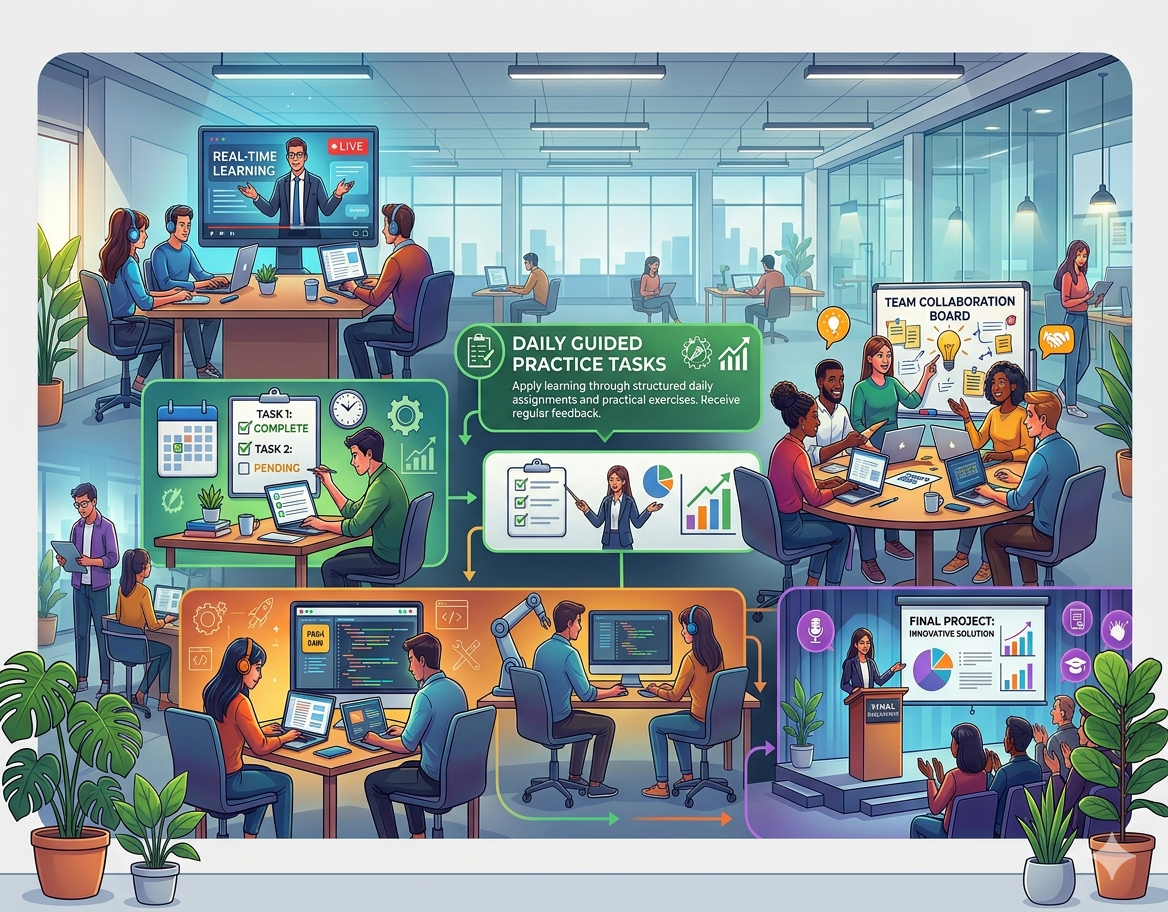
The internship follows a standard industry-style format, combining learning, hands-on practice, and project development. Students participate in live training sessions, complete small tasks and activities, and gradually progress toward building their own mini-projects. This approach helps them develop logical thinking, problem-solving skills, and creativity while working with modern tools and platforms.

In addition to technical skills, the program also focuses on building confidence, teamwork, and presentation abilities. Students work in groups, share ideas, and present their projects at the end of the internship, giving them a complete exposure to how real tech projects are developed and showcased. By the end of the program, students gain a strong foundation in technology, practical experience, and the confidence to explore future opportunities in coding and AI.
πŸš€ Internship Highlights

  • Designed for students of Class 8th–10th.
  • Structured internship with real learning outcomes.
  • Beginner-friendly (no prior coding experience required).
  • Hands-on training with practical sessions.
  • Exposure to real-world AI applications.
  • Guided by industry experts.

πŸ“š What Students Will Learn

  • Basics of Coding (logic building & problem solving).
  • Introduction to Artificial Intelligence.
  • Working with simple AI tools and platforms.
  • Understanding real-world AI use cases.
  • Project development skills.

πŸ› οΈ Internship Program Structure

  • Live interactive training sessions.
  • Daily guided practice tasks.
  • Team-based learning & collaboration.
  • Mini project development.
  • Final project presentation.
  • Certificate of Completion.

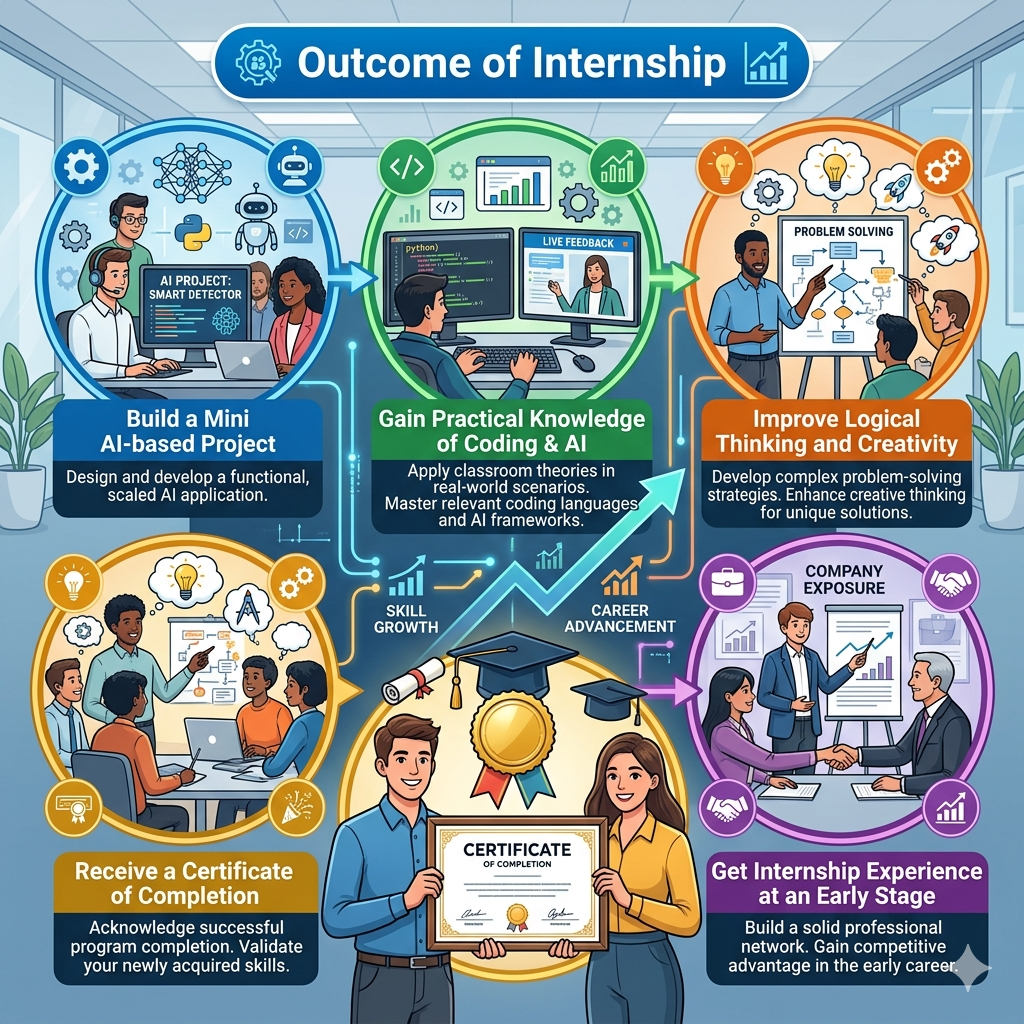
🎯 Outcome of Internship

  • Build a Mini AI-based Project.
  • Gain practical knowledge of coding & AI.
  • Improve logical thinking and creativity.
  • Develop problem-solving and analytical skills.
  • Gain confidence in using technology and presenting ideas.
  • Get internship experience at an early stage.
  • Receive a Certificate of Completion.

Who should Enroll?

Students in Classes 8 to 10

Students Who Wish To Build Strong Technical Skills Should Enroll.

Students Seeking Structured Learning

Students Who Are Ready To Build Powerful Tech Skills & Become Future Innovators.

Students wants to build AI Products

Students Aiming For Strong Python, Data Handling, and AI Ethics Skills.

Course Curriculum

β–Ό MODULE 1: AI Explorer – Foundations of the Future
1 lectures

GOALS OF THIS COURSE

  • βœ” Think logically like a problem solver
  • βœ” Understand how AI apps & websites work
  • βœ” Develop early exposure to tech careers
  • βœ” Create real projects
  • βœ” Build strong foundation
  • βœ” Use AI tools productively

Learning (Module 1 Focus)

  • βœ” Understand computers, coding & AI from absolute basics
  • βœ” Build curiosity and confidence towards technology
  • βœ” Remove fear of coding at an early age

Topics Covered

  • βœ” What is a Computer & How It Thinks
  • βœ” What is Coding? (Real-life examples)
  • βœ” What is Artificial Intelligence?
  • βœ” AI used in Google, YouTube, Games & Mobile Apps
  • βœ” Difference between Human Intelligence & Machine Intelligence
  • βœ” Safe & responsible use of technology for children
  • βœ” Introduction to projects they will build in later modules

Outcomes

  • βœ” Student understands why they are learning coding
  • βœ” Clear picture of what they will create by course end
  • βœ” High motivation to continue remaining modules
  • βœ” Parents gain confidence in course value & safety
β–Ό MODULE 2: Python Coding Basics – Think Like a Programmer
15 lectures

Learning (Module 2 Focus)

  • βœ” Learn Python from scratch
  • βœ” Develop problem-solving mindset
  • βœ” Write real programs, not theory only

Topics Covered

  • βœ” Variables, Data Types & Conditions
  • βœ” Loops & Logical Statements
  • βœ” User Input & Output
  • βœ” Introduction to Functions
  • βœ” Simple coding challenges

Outcomes

  • βœ” Student can write Python programs independently
  • βœ” Improved maths & logical skills
  • βœ” Confidence in coding exams & competitions
β–Ό MODULE 3: Game Development with Python
15 lectures

Learning (Module 3 Focus)

  • βœ” Learn coding through fun & creativity
  • βœ” Understand how real games are made
  • βœ” Apply Python concepts practically

Topics Covered

  • βœ” Game logic & flow
  • βœ” Python game libraries (student-safe)
  • βœ” Score system & levels
  • βœ” Keyboard & mouse interaction

Outcomes

  • βœ” Student understands real-world application of coding
  • βœ” Increased interest in technology & STEM fields

Projects

  • βœ” Snake Game
  • βœ” Racing Game
  • βœ” Memory Puzzle Game
β–Ό MODULE 4: Artificial Intelligence for Kids (No-Code + AI Tools)
7 lectures

Learning (Module 4 Focus)

  • βœ” Learn AI concepts without complex maths
  • βœ” Use real AI tools safely

Topics Covered

  • βœ” What is Machine Learning?
  • βœ” Image & Voice Recognition
  • βœ” Chatbots & Smart Assistants
  • βœ” Google Teachable Machine
  • βœ” Ethical & safe use of AI

Outcomes

  • βœ” Student understands AI practically
  • βœ” Awareness of responsible AI usage
  • βœ” Ready for advanced AI learning in higher classes

Projects

  • βœ” Face Detection Model
  • βœ” Voice Recognition App
  • βœ” Smart Image Classifier
β–Ό MODULE 5: Digital Creativity – AI for YouTube, Social Media & Freelancing
5 lectures

Learning (Module 5 Focus)

  • βœ” Use AI tools creatively
  • βœ” Learn how technology supports income & creativity
  • βœ” Build digital confidence early

Topics Covered

  • βœ” AI tools for YouTube scripts & thumbnails
  • βœ” AI for posters, reels & content creation
  • βœ” Introduction to freelancing mindset
  • βœ” Online safety & cyber awareness

Outcomes

  • βœ” Student learns productive screen usage
  • βœ” Early exposure to digital careers
  • βœ” Confidence in communication & creativity

Projects

  • βœ” AI-Generated YouTube Idea
  • βœ” Social Media Poster using AI
  • βœ” Mini Freelancing Portfolio
β–Ό MODULE 6: Career Awareness & Future Roadmap
2 lectures

Learning (Module 6 Focus)

  • βœ” Career clarity from school level
  • βœ” Right subject & stream selection guidance
  • βœ” Confidence building & presentation skills

Topics Covered

  • βœ” AI & Coding career options in future
  • βœ” Competitive exams & future skills
  • βœ” How coding helps in all careers
  • βœ” Communication & confidence sessions

Outcomes

  • βœ” Clear direction for parents & students
  • βœ” Reduced career confusion
  • βœ” Strong foundation for higher studies

Projects

  • βœ” My Future Tech Career Plan (Presentation)

Why Parents Trust This Course

  • βœ” Age-appropriate & safe content
  • βœ” Improves logical thinking & academics
  • βœ” No screen addiction – productive learning only
  • βœ” Builds confidence, not pressure
  • βœ” Future-ready skills from early age

Course Projects

PROJECT 1

Image Classification Model
(Using Teachable Machine)

Project Description: Students train a simple AI model to recognize different objects such as fruits, school items, and shapes using images. They will collect sample data, train the model, and test its accuracy in real-time to understand how AI systems learn from visual inputs.

Learning Outcomes: Understanding datasets including image collection and labeling techniques, Clear difference between training and testing processes in AI models, How AI models make predictions based on learned patterns, Basic model evaluation techniques and accuracy measurement concepts, Introduction to improving model performance.

PROJECT 2

Python Chatbot
(Rule-Based AI)

Project Description: Students build a simple chatbot that answers basic questions such as school timings, subject information, bus schedules, and greetings. They will design conversation flows and implement logic so the chatbot can respond appropriately based on user input, simulating real-world interactions.

Learning Outcomes: Understanding if-else logic and conditional statements, Developing decision-making and logical thinking skills, Simulating basic AI behavior through predefined responses, Improving problem-solving and structured programming approach.

PROJECT 3

AI Quiz Generator
(Python + Random Module)

Project Description: Students build an interactive quiz application that asks math and science questions randomly and provides scores based on their answers. They will design question sets, implement random selection of questions, and display results at the end, making the quiz engaging and dynamic.

Learning Outcomes: Understanding lists and dictionaries for storing questions and answers, Using the random module to generate unpredictable quiz questions, Applying loops to iterate through questions, Developing basic logic for scoring and result evaluation.

PROJECT 4

Smart Safety Alert System
(Rule Based AI Simulation)

Project Description: Students simulate an AI System that gave alerts based on conditions like: Temperature too high, water level too low, Motion detected, Learning Outcomes, Understanding rule-based AI Using Conditions + Sensors Simulation.

Learning Outcomes: Understanding rule-based AI systems, Using conditional statements (if-else logic), Simulating real-world sensor data (temperature, motion, water level), Developing problem-solving and decision-making skills, Basic understanding of automation systems.

Join Now! Secure your seat
CBT Support βœ–